The five things that matter
- The ticket is personal and time-slotted. At the entrance, they’ll ask for ID matching the name on the voucher, so you can’t give it to a friend: how the check works.
- From May to September, tickets sell out. In winter, you might find availability on the same day, but not in spring: how far in advance to book.
- Porta Marina if you’re arriving by train, Piazza Anfiteatro if you want to start from the east. Piazza Esedra is the convenient access for groups and the Antiquarium: the three entrances, one by one.
- You’ll see the highlights in about four hours. Most people stay 2–3 hours, though, because eventually your legs decide for you: how long you really need.
- The Pompei Express is enough for a first visit. The Plus adds the suburban villas, including Villa dei Misteri, and only makes sense if you have a full day: the differences.
What’s included in the two-hour guided tour
This is the option I recommend most often to first-time visitors to Pompeii. Here’s what you get.
How it works
- Skip-the-line entry, no ticket-office queue
- Two hours with an archaeologist guide
- Groups of up to twelve people
- Headphones, so you can hear even from the back
What's included
- Admission ticket to the archaeological park
- Archaeologist guide for the entire tour
- Headphones and site map, which you can keep afterwards
- Free cancellation and instant confirmation
Where a guided tour goes
The stops in the western part of the city, in the order you’ll see them.
Almost every short tour follows the same route: you enter through Porta Marina, head up to the Forum, and from there move between the houses and theaters in the western part. This is the section of Pompeii that holds up best in two hours, and it also has the most shade.
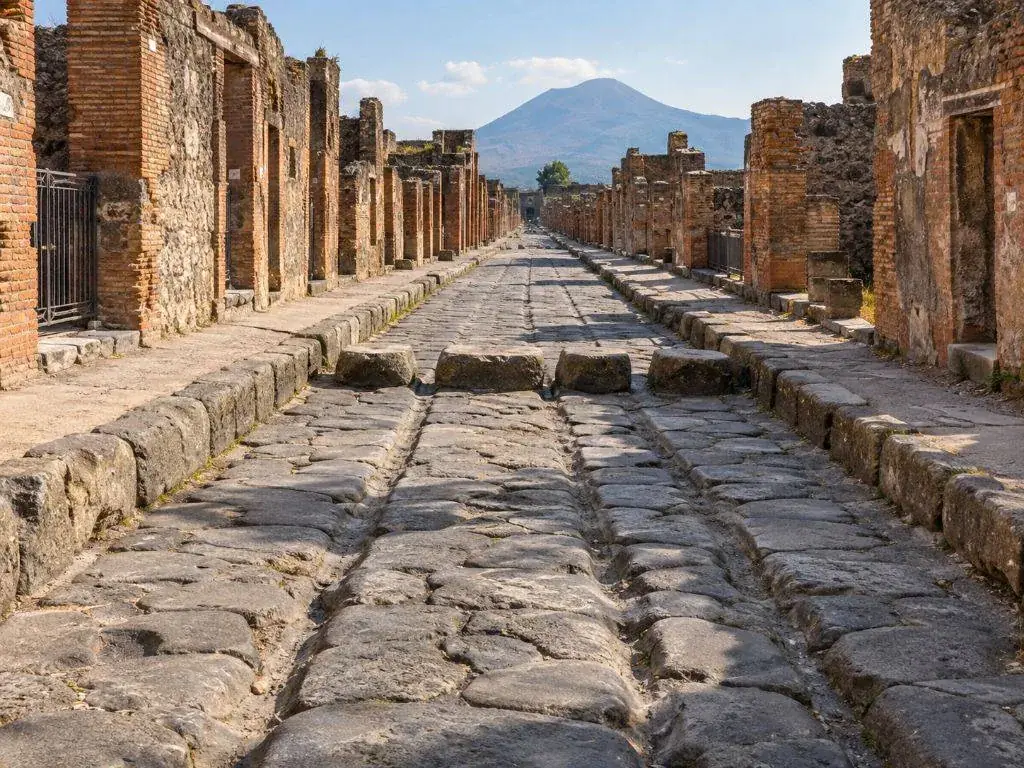
- Porta Marina — The closest entrance to the station. You walk in uphill on the original paving—choose your shoes here, not later.
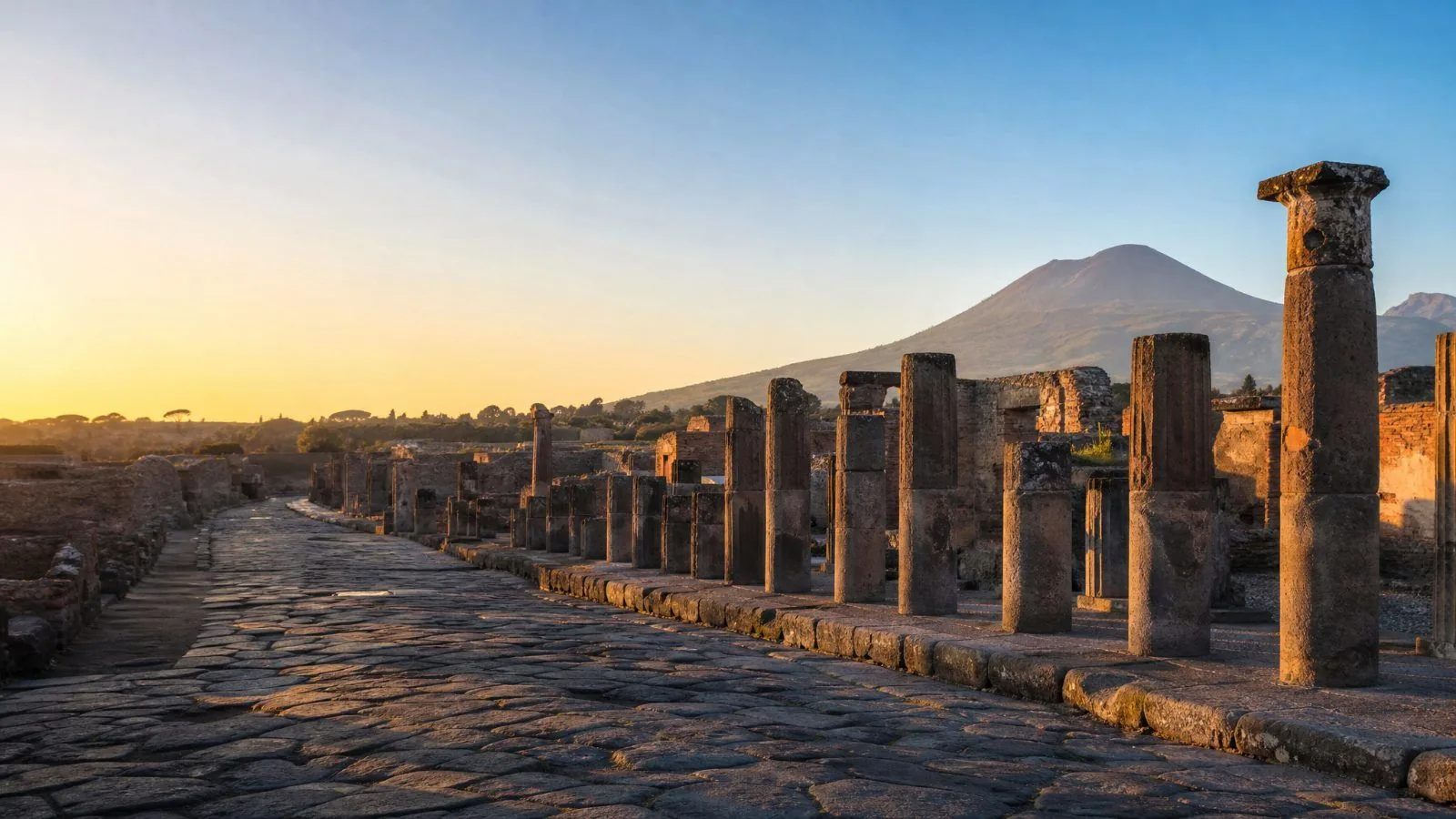
- The Forum — The public square, with Mount Vesuvius in the distance. The site’s café and restrooms are on this side.
- The Basilica — The city’s courthouse, on the west side of the Forum. It helps you understand how the administration was organized.
- The Forum Baths — Some of the best-preserved covered spaces in the site, and the first place where you really see how houses were laid out inside.
- The House of the Faun — Pompeii’s largest private residence. It takes up an entire city block on its own.
- The Macellum — The covered food market, on the north side of the Forum.
- The Large Theatre — The seating area overlooking the valley, in the theater district. Many tours end here.
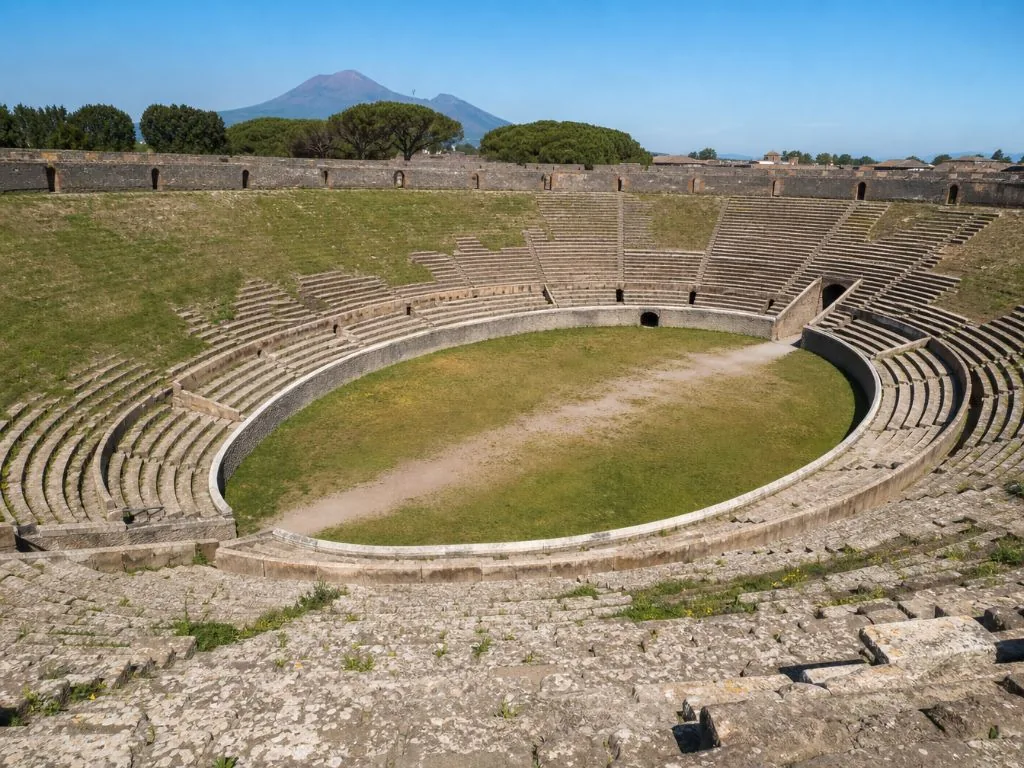
Beyond this main route, you’ll find the Amphitheatre, the Great Gymnasium, the Lupanare, the House of Menander and the plaster casts of the victims: all worth your time, but they’ll need more than two hours. If you’ve got a full day, check out what to see and in what order.
How to book, step by step
Choose your format
Guide, audio guide, private tour or full-day trip with Mount Vesuvius.
Pick your time slot
The ticket is valid for one day and one slot. Early morning in summer is the smart choice.
Book and save your voucher
The voucher has your name on it: you’ll need it along with an ID.
Show up at the gate
Pick-up is at Porta Marina or Piazza Porta Marina Inferiore.
2-hour guided tour: flexible dates
If you don’t feel like overthinking it, this is the option that works for most people: two hours, small group, archaeologist guide, skip-the-line entry.
Ticket, group or private?
Three different ways to experience the same site. The pace changes, and so does how much you understand—but it’s still Pompeii.
| Pompeii: admission ticket with audio guide | Best choicePompeii: skip-the-line ticket and guided tour | Pompeii: private tour with an archaeologist | |
|---|---|---|---|
| Duration | A full day at your own pace | 2 hours | 3 hours |
| With whom | Solo, with audio guide | Group of up to 12 | Just your group |
| Admission | Priority admission | Skip the line | Skip the line |
| Languages | Five, on app or audio guide | Archaeologist guide | Nine languages |
| Good for | Been here before | First-time visitors | Curious travelers |
| Rating | 4.1 | 4.6 | 4.9 |
| See details → | Book this → | See details → |
Photo gallery
What Pompeii is really like
A few glimpses of the site, no brochure filters.



Most booked options
The four I get asked about all the time. The other two, with Herculaneum and including transfers, are in all the tours.
 Top choice
Pompeii: skip-the-line ticket and guided tour
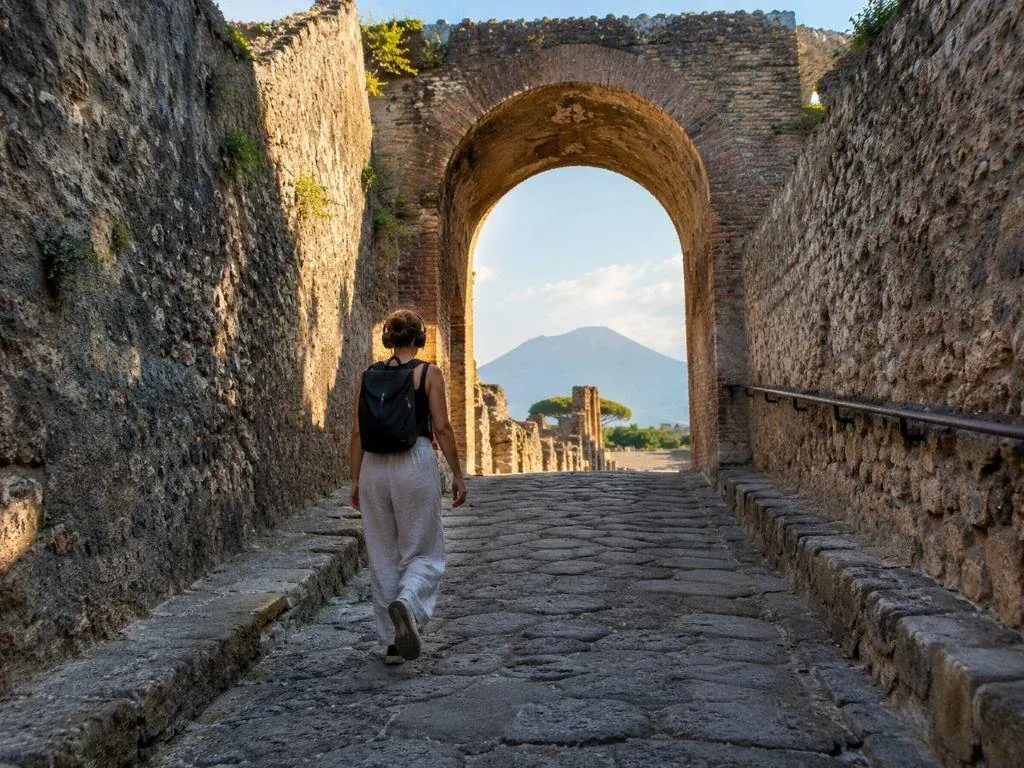 Most booked
Pompeii: admission ticket with audio guide
 Pompeii + Mount Vesuvius
From Naples: Pompeii and Mount Vesuvius day trip
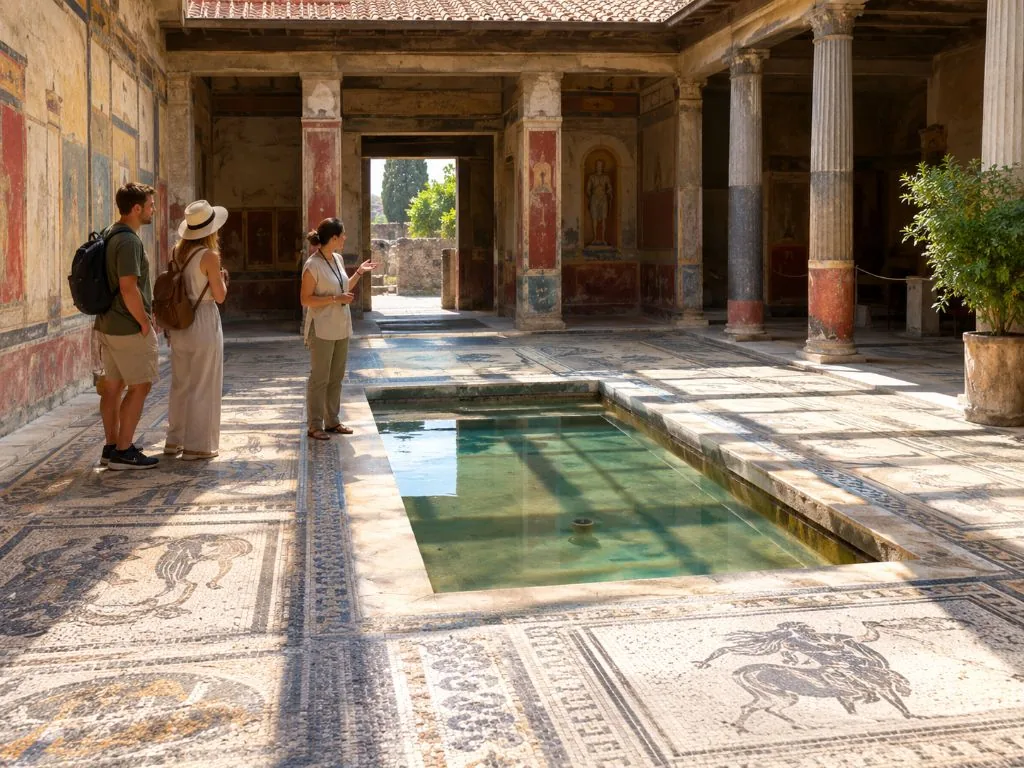 Just your group
Pompeii: private tour with an archaeologist
What visitors say
Reviews from travelers who booked the options above.
The guide stopped us inside the Forum Baths to explain how they were heated. On our own, we would have walked right past in thirty seconds.
We skipped the line for those waiting to pick up tickets. That alone would make me choose the same option again.
A really long day: left Naples in the morning, saw the crater’s edge, had pizza for lunch, and headed back around five.
Three hours with an archaeologist, and we could interrupt him anytime. He walked us through the House of the Vettii, room by room.
In July, the paving stones are scorching, and the group stretches out. The headsets are a lifesaver—you can still hear everything even in the shade.
The round-trip transfer took the hassle out of transport. Two and a half hours inside, no rushing at the end.
Ratings and reviews are live data from GetYourGuide operators. Read all our reviews ›
Four common doubts that keep coming up
The questions friends and family always ask me the night before I leave.
Guide or audio guide?
With a guide you understand the houses and signs you’d otherwise look at without really seeing. With the audio guide you go at your own pace and can stay all day. I compared the two options in guide or audio guide.
How much time do you need?
For the main highlights, plan on about four hours; the average real visit lasts 2–3. To see all 44 hectares you’d need at least two full days, and I don’t recommend doing them back-to-back: how to split your time.
What’s the best time to go in?
In high season the mornings are packed with cruise-ship tours, so afternoons are quieter. From November to March it’s the opposite, because the entrances close at 3:30 PM. Details in when to visit Pompeii.
Can I get there without a car?
Yes, and it’s the easiest way: the Circumvesuviana train from Naples to Sorrento stops at Pompei Scavi, just a short walk from the entrance. If you’re driving, there are supervised parking lots near Porta Marina and Piazza Esedra: how to get there.
Dates not working for you?
Check the other available departures and pick the one that fits your trip — instant confirmation and free cancellation on most options.
Pompeii, explained
I grew up in Torre Annunziata, two stops on the Circumvesuviana from the ruins, and over the years I’ve taken more relatives and friends inside than I can count. I’m not a licensed guide and I don’t pretend to be: what follows is what I say the night before, while someone’s digging out the voucher from their inbox.
How big it is, and why that changes everything
Pompeii isn’t a monument with a queue in front. It’s a city: forty-four hectares of streets, houses, shops and courtyards, with the original paving underfoot. To see it all, you’d need at least two full days, and almost no one has that. The average visit lasts two or three hours; you can cover the main sights in about four, if you walk with a plan in mind.
After that, you’re just walking. The July heat rises from the stones, the toilets are far away, and your legs give up long before your curiosity does. So the useful question isn’t how much can I see, but what do I choose to see: I’ve ranked the sights by priority in what to see in Pompeii.
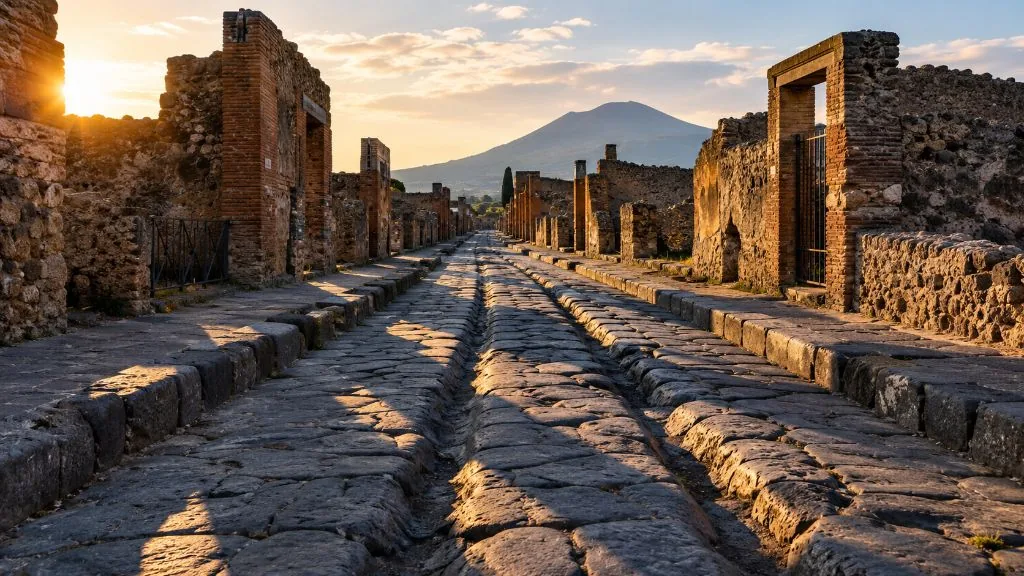
Ticket or guided tour
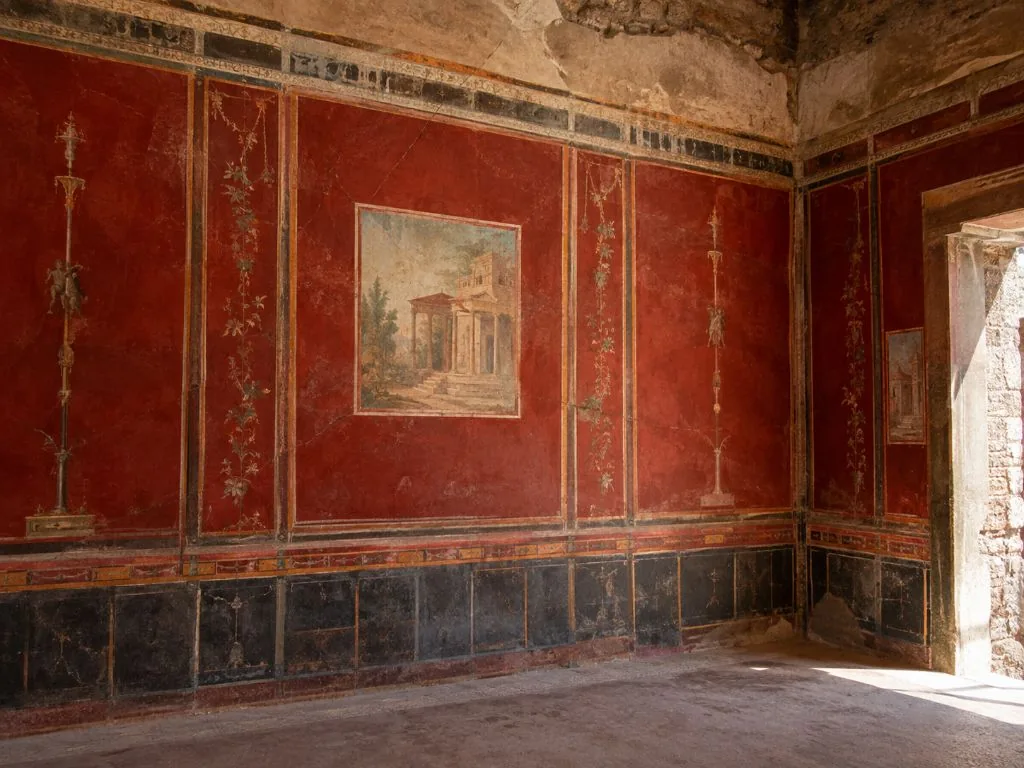
This is the biggest decision you’ll make, and it’s one you make before you leave. Without someone to explain it all, much of Pompeii remains just a beautiful wall: you’ll grasp the Amphitheatre and the Forum, but the shop signs, tavern counters, and house rooms will pass you by without saying a thing.
The two-hour guided tour solves exactly that: a group of no more than twelve people, an archaeologist guide, headsets so you can hear even from the back, and you skip the queue to get in. The ticket with an audio guide does the opposite—and does it well: it’s valid for a full day, the audio guide is available as an app or a physical device in five languages, and it lets you stop wherever you want for as long as you want. I recommend it if you’ve already been to Pompeii, if you’re into photography, or if you hate lining up behind an umbrella.
Then there’s the third option: a private tour with an archaeologist. Three hours, just your group, the western part of the city with the House of Menander and the House of the Vettii, and nine languages available. It’s the most expensive option and also the highest-rated, because you can interrupt and ask questions. If you’re still torn between the first two, the clear-cut comparison is in guided tour or audio guide; if the third one interests you, check out the private tours.
Which entrance to use
There are three entrances in use, and they’re not interchangeable. Porta Marina is the natural choice if you’re arriving by train, because the Pompei Scavi station on the Circumvesuviana Naples–Sorrento line is just a short walk away. Piazza Anfiteatro puts you right in the eastern area, in front of the oldest known Roman amphitheatre. Piazza Esedra is the convenient entrance for groups and the recommended access to the Antiquarium.
If you’re driving, the supervised car parks are near Porta Marina and Piazza Esedra, and they fill up during peak hours: you’ll find a spot before ten, but after that, it’s a gamble. To see which entrance works best for you, check out the three entrances to Pompeii.

The pace of a real visit
The park opens at nine all year round. From October 15 to March 14, last entry is at 3:30 PM and it closes at 5:00 PM; from March 16 to October 14, you can enter until 5:30 PM and it closes at 7:00 PM. It’s closed on December 25 and January 1.
In high season, mornings belong to cruise ship excursions, so afternoons are much quieter. In winter, the opposite is true because afternoons are short: it’s cold and damp, but the site is as empty as you’ll never see it. I still recommend April and May, then September and October. The full breakdown of seasons is in when to visit Pompeii.
There’s a café near the Forum inside, drinking water and restrooms in several spots. Bring a water bottle—there are fountains outside the entrances to refill it. Large backpacks and luggage aren’t allowed: the commercial cloakroom is near the Pompei Scavi stop. There’s no dress code, but the paving stones are uneven and rough, so wear closed, comfortable shoes and light clothing. The rest is in what to bring.
Mistakes I see most often
The first is showing up without a ticket on a Saturday in May. On peak days, tickets sell out and the line at the ticket offices moves slower than anyone expects. The second is underestimating the name on the voucher: the ticket is named and timed, and they check for matching ID, so don’t hand it to your sister-in-law at the last minute.
The third is picking the first Sunday of the month because entry is free and finding half the region ahead of you. It happens, and it’s only worth it if you leave early and have patience. The fourth is squeezing Pompeii, Mount Vesuvius and Herculaneum into the same afternoon: Herculaneum takes an hour and a half or two and a half and is much quieter, but it needs to be taken at a relaxed pace, not at the end of a long day. How to plan them is in Pompeii or Herculaneum.
If you need to decide now
First visit, short on time, want to understand what you're looking at: a two-hour guided tour. Been before or prefer your own pace: a ticket with an audio guide, valid all day. In Naples without transport and want the crater too: the full-day combo with Mount Vesuvius, including transport and return around five. The six options side by side are in all tours.
Frequently asked questions
Do you need to book tickets for the Pompeii Ruins?
On peak days, yes. From May to September, tickets sell out and queues at the ticket offices are long and slow. In winter, you might find same-day availability, but don’t count on it in spring: see how far in advance to book.
How much time do you need to visit Pompeii?
You can see the main highlights in about four hours. The average stay inside the site is 2–3 hours, though, and the heat shortens it naturally. To cover the entire park, you’d need at least two full days: how to plan your time.
Which ticket is right for a first visit?
Pompei Express, which covers the ancient city, is enough for a short first visit. Pompei+ adds the suburban villas, including Villa dei Misteri and Villa di Diomede, and is only worth it if you have a full day. The differences are in Pompeii Express or Pompeii+.
Guided tour or audio guide—which is better?
It depends on how much you want to understand and how long you want to linger. The guided tour lasts two hours, is in groups of up to twelve people, and gives you someone to ask questions; the audio guide ticket is valid all day and lets you explore at your own pace. The full comparison is in guided tour or audio guide.
Which entrance do you use for Pompeii?
There are three entrances in use. Porta Marina is the natural choice if you arrive by train, Piazza Anfiteatro puts you right in the eastern area and near the Amphitheatre, and Piazza Esedra is more convenient for groups and the recommended access to the Antiquarium: which one to choose.
When’s the best time to visit Pompeii?
April–May and September–October are the best times: mild weather and fewer crowds. In summer, early morning or late afternoon is better, partly because cruise ship excursions arrive in the morning. In winter it’s cold and damp, but the site is much quieter: seasons and opening times.
Is entry to the Pompeii ruins free?
Yes, on the first Sunday of every month with the Domenica al Museo initiative. But it’s also the busiest day of the month, so it’s only a good idea if you’re patient and set off early: what it really means.
Pompeii or Herculaneum?
Herculaneum is compact and takes 1.5–2.5 hours to visit, with far fewer people around. Pompeii is vast and deserves a full day. You can do both in one day—start with Pompeii for its urban layout, then Herculaneum for its well-preserved details: the full comparison.
Still unsure? Email us at [email protected]